Safety & Security Research Initiative
The Safety and Security Research Initiative (SSRi) is a platform dedicated to developing, enhancing, and disseminating knowledge and methodologies to effectively address and mitigate the risks and ethical concerns associated with (fieldwork) research.
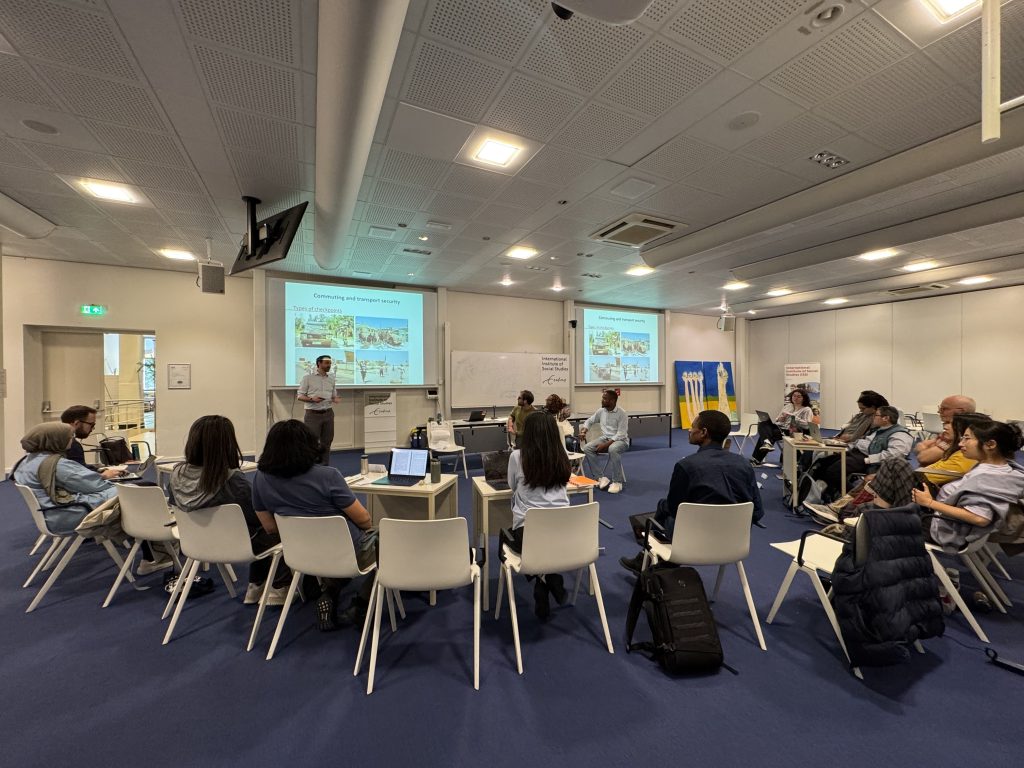
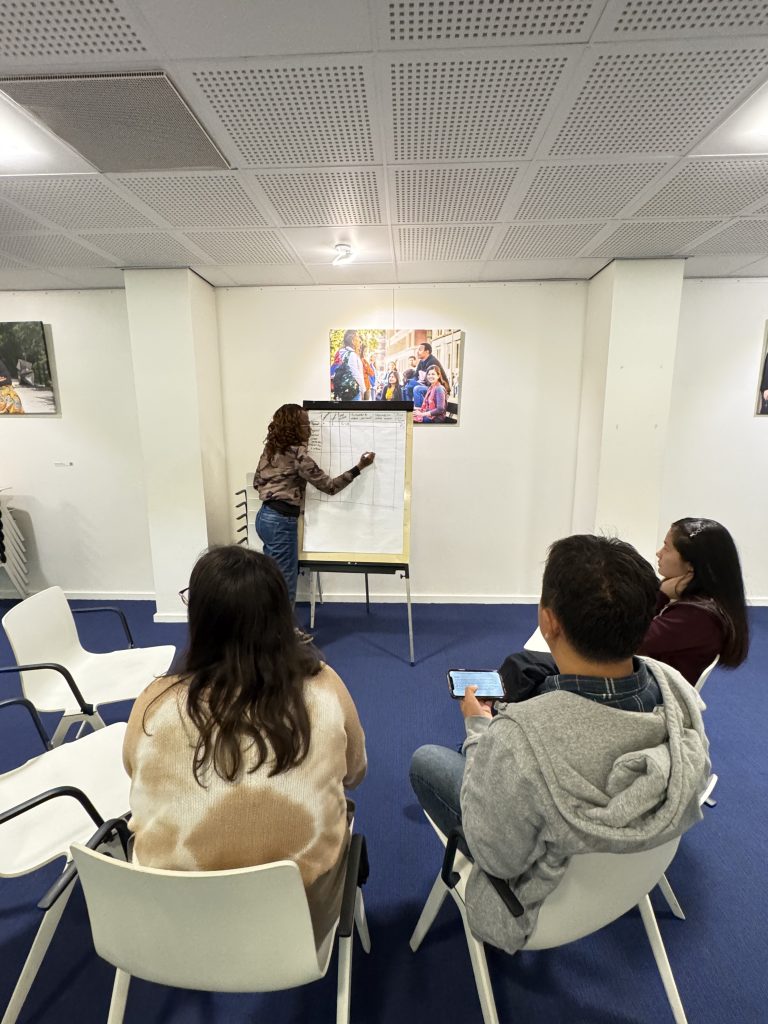
Upcoming courses: Safety, Security and Risk Management for Fieldwork in Highly Complex Contexts
The production of reliable knowledge is essential for research, policy, humanitarian, development, and peace action in complex and rapidly changing environments. Yet, fieldwork in contexts of conflict, humanitarian crises, social vulnerability, or politically sensitive environments requires more than logistical preparation. Safety, security, and ethics are structural components that directly influence the quality of professional work, the protection of the people involved, and the validity of the knowledge produced.
This course approaches safety and risk management from a scientific and methodological perspective, placing them at the center of research and fieldwork design. Participants will learn how ethical decision-making, risk analysis, and data protection intersect with methodological rigor in complex environments. The course provides practical tools to assess risks, design mitigation strategies, establish secure communication protocols, protect sensitive information, and make informed decisions in the field. These competencies strengthen participants’ ability to plan field activities responsibly, interact ethically with vulnerable populations, manage uncertainty, and maintain professional integrity under pressure.
The course is intended for professionals and advanced students who conduct -or aspire to conduct- fieldwork in complex contexts. It is relevant for social researchers, journalists, physicians and health professionals, archaeologists, anthropologists, humanitarian workers, public officials, consultants, human rights’ defenders, NGO staff, development practitioners, project managers, communicators, and academics across disciplines. No prior training in security is required, but participants should have an interest in understanding how safety, ethics, and methodological decisions shape responsible and rigorous field practice and knowledge production.
The course is facilitated by Dr Rodrigo Mena, an internationally recognized scholar in humanitarian research and founder of the Safety and Security Research Initiative (SSRi), hosted by The Hague Humanitarian Studies Centre – ISS. With more than a decade of experience researching, training researchers and practitioners working in complex and high-risk environments, he brings an approach that integrates academic rigor with practical field experience and international standards in research safety and ethics.
Next courses: Email Rodrigo if you are interested to attend at mena@iss.nl
Brazil
Dates: 14, 15, 16 April
Language: Portuguese
Location: Belém, Brazil – Federal University of Pará
Colombia
Dates: 26, 27, 28 May
Language: Castellano (Spanish)
Location: Bogotá, Colombia – Universidad de Los Andes
The Netherlands
Dates: 10, 11, 12 June
Language: English
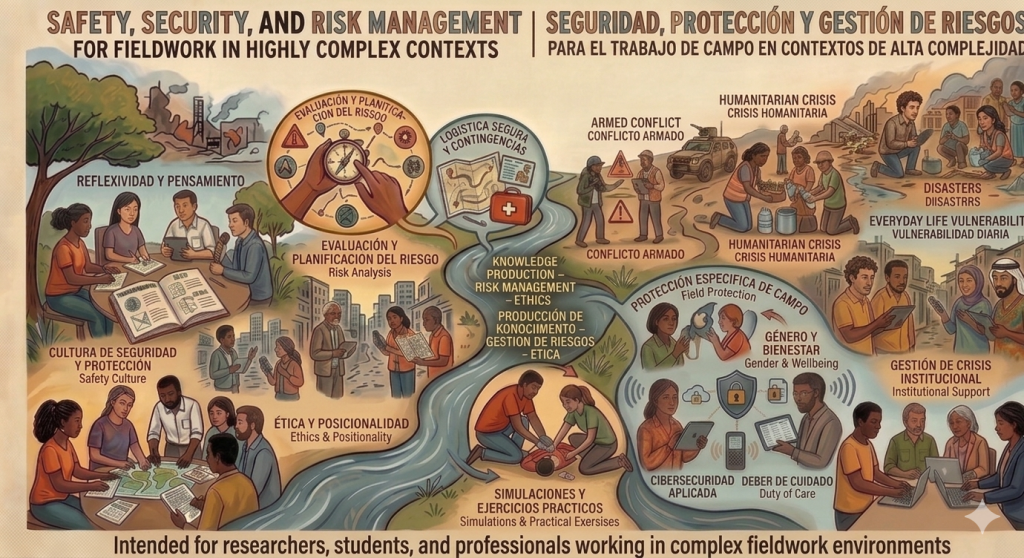
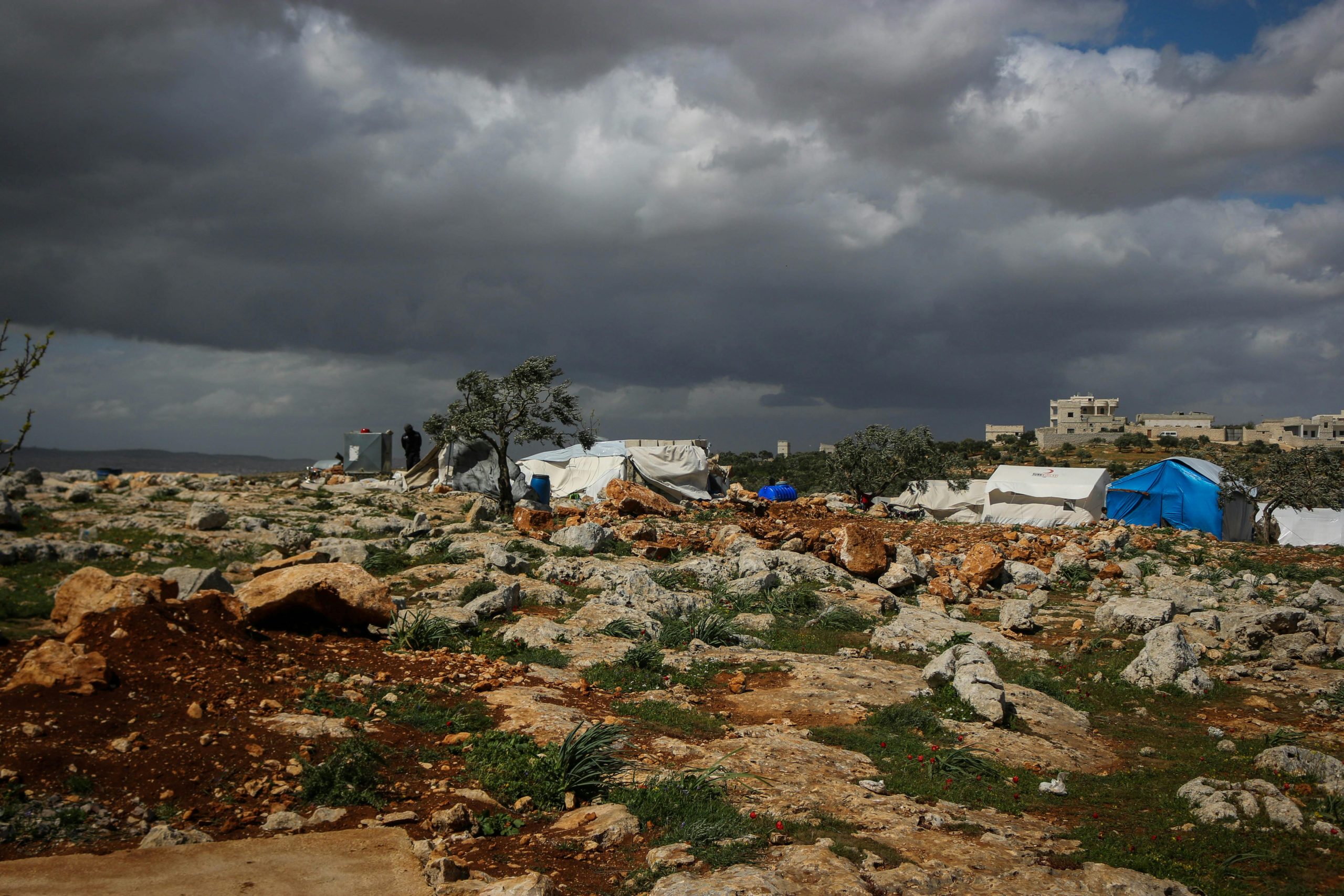
Image generated with AI using Nano Banana – Gemini
Our initiative includes:
- ‘Fieldwork Safety and Security’ Training: A course designed to assist researchers working in complex, remote, or hazardous environments, whether in their home country or abroad.
- ‘Train the Trainers’ Program: A program to expand the number of qualified instructors for the ‘Fieldwork Safety and Security’ course, ensuring broader knowledge transfer and safer research practices.
- ‘Real and Everyday Risks of Researching Crises’ Research Project: A research project that examines the risks researchers face while conducting fieldwork.
Contact Dr Rodrigo Mena if you have any questions or would like to request a training | Email mena@iss.nl
Why Focus on Safety and Security in Research?
Fieldwork research is an essential part of knowledge production, allowing researchers to collect firsthand data, interact with communities, and generate deeper insights into complex social, political, and environmental issues. However, conducting research in the field comes with a range of challenges that must be acknowledged and addressed to ensure ethical and responsible practices.
Research often takes place in unfamiliar or unpredictable environments, where safety, security, and ethical considerations must be prioritized. The risks involved in fieldwork are diverse and may include:
- Personal Health Risks: Field researchers may encounter physical health hazards such as infectious diseases, poor sanitation, food and water insecurity, and exposure to extreme climates. Limited access to medical facilities in remote areas can further amplify these risks.
- Safety Threats: Researchers may face security threats ranging from theft and data loss to more severe dangers like violence, surveillance, or even abduction, particularly in politically volatile or high-crime regions. Understanding and preparing for these risks is essential for maintaining personal safety and protecting research integrity.
- Emotional and Psychological Stress: Fieldwork can be emotionally demanding, especially when dealing with sensitive topics or vulnerable populations. The risk of vicarious trauma, burnout, and emotional fatigue is high, making psychological well-being a critical aspect of research preparedness.
- Reputational Risks: The way research is conducted, interpreted, and communicated can have lasting impacts on the reputation of individual researchers, their institutions, and the communities involved. Ethical missteps, data mismanagement, or political sensitivities can lead to significant reputational harm.
- Legal and Ethical Concerns: Navigating complex legal frameworks, securing research permits, respecting privacy laws, and adhering to institutional ethics guidelines are crucial for conducting responsible research. Failure to comply can lead to legal repercussions and hinder future access to research sites.
While these risks are significant, addressing them effectively allows researchers to carry out meaningful, ethical, and impactful work. A well-prepared researcher is more likely to build trust with local communities, ensure the safety and dignity of participants, and produce reliable and responsible research outcomes. Furthermore, institutions that prioritize safety and security training create an environment where researchers can thrive, knowing they have the necessary tools and support to mitigate potential dangers.
By acknowledging and proactively managing risks, researchers not only protect themselves and their collaborators but also contribute to a culture of ethical and responsible research. Ensuring safety and security in fieldwork is not about avoiding challenges but about navigating them thoughtfully, ensuring that research remains a force for positive change.
Fieldwork Safety and Security Training
Fieldwork is an integral part of many social sciences, requiring researchers to be physically present in the locations they study. However, field research poses unique risks, including health hazards, logistical difficulties, and security concerns. Without adequate preparation, these challenges can jeopardize research integrity, personal safety, and institutional responsibility.
Most safety and security (S&S) training programs available focus on professionals from NGOs, diplomatic missions, and development organizations, who often operate under institutional security protocols. Academic researchers, however, frequently work “independently” or with limited structured institutional support. This course bridges that gap, offering tailored safety and security strategies for researchers conducting fieldwork, particularly in sensitive and high-risk environments.
In addition to security concerns, the course also addresses the methodological aspects of fieldwork, ensuring researchers understand how to ethically and effectively collect data in sensitive settings.
This training is conducted in partnership with CERES.

Train the trainers program
With growing demand for our Safety and Security Training, we have developed a Train the Trainers Program to expand expertise and capacity in different universities and organizations. This initiative enables institutions to integrate safety and security training within their own frameworks, ensuring sustained support for field researchers.
Recognizing that policies and institutional support are as critical as individual preparedness, we also provide guidance on developing institutional frameworks that prioritize researcher safety and well-being.
IHSA Working Group on Safety and Security of Research
The International Humanitarian Studies Association (IHSA) is a network engaged with the study of humanitarian crises caused by disaster, conflict or political instability. Humanitarian studies concern how humanitarian crises evolve, how they affect people and their institutions, communities and societies, and the responses they trigger.
This IHSA working group aims to boost and make safety and security initiatives and efforts more widely discussed, developed, and implemented. It intends to explore and make strides on matters of safety and security during research, both for those working within their home country, and as foreigners, also to offer a space for discussing the safety and security agenda, identifying institutional barriers, and sharing good practices pertaining to the safety, security and ethical components of doing research.
The working group welcomes all researchers engaging in fieldwork at all levels of seniority; both researchers working in their home country, and those whose home and normal residence is elsewhere, as well as researchers who work in a remote or hazardous part of their own country.

Publications and Resources
As part of SSRi, we continuously produce publications, guidelines, and best practices to support safe and ethical field research. Our resources are available for researchers, institutions, and organizations looking to implement or enhance safety measures in their fieldwork practices:
- Mena, R., & Hilhorst, D. (2021). Ethical considerations of disaster research in conflict-affected areas. Disaster Prevention and Management: An International Journal, 31(3). https://doi.org/10.1108/DPM-03-2021-0075
- Hilhorst, D., Hodgson, L., Jansen, B., & Mena, R. (2016). Security guidelines for field research in complex, remote and hazardous places. ISS-EUR.
- Johnson, L., & Mena, R. (2021, September 20). Risk dumping in field research: Some researchers are safer than others. Debating Development Research – EADI Blog.
- Hilhorst, D., & Mena, R. (2017, February 5). A double message about safety and security for field research: “Protection is crucial” and “Don’t overdo it.” Norwegian Centre for Humanitarian Studies.
- Mena, R. (2019, January 21). Are you oversimplifying? Research dilemmas, honesty and epistemological reductionism. Bliss.
- Mena, R., & Hilhorst, D. (2020, May 20). Remote research in times of COVID-19: Considerations, techniques, and risks by Rodrigo Mena and Dorothea Hilhorst. Bliss.
- Mena, R. & ARC. (2018). Manual on Conflict Analysis Tools: Preventing, mitigating and reducing the risk of social conflict in Civil DRR Projects (p. 20). Afghanistan Resilience Consortium (ARC), Oxfam.
Stay up to date



Contact
humanitarianstudiescentre@iss.nl
Visit the HSC
Based at the International Institute of Social Studies
Kortenaerkade 12
2518 AX The Hague
The Netherlands
Quick links
blank>